

 Feed back
 Privacy Policy
Arrow Quest
It's 8:15 a.m. in Kolkata. Twelve-year-old Riya, born under Sagittarius on November 27, adjusts her AR glasses and smiles as a hologram of her debate partner flickers into existence—Ahmed from Dhaka, grinning back in real-time despite the 400-mile distance. They're preparing for a cross-border climate summit hosted by an AI-powered platform that just assigned them personalized research packets based on their curiosity profiles. Their teacher? An adaptive AI mentor named "Nova," trained on millions of academic interactions but fine-tuned to nurture Sagittarian traits: independence, big-picture thinking, and relentless questioning.
This isn't science fiction. In 2025, this is how new learning paths are evolving—not just for Riya and Ahmed, but especially for those born under the sign of the Archer: Sagittarians.
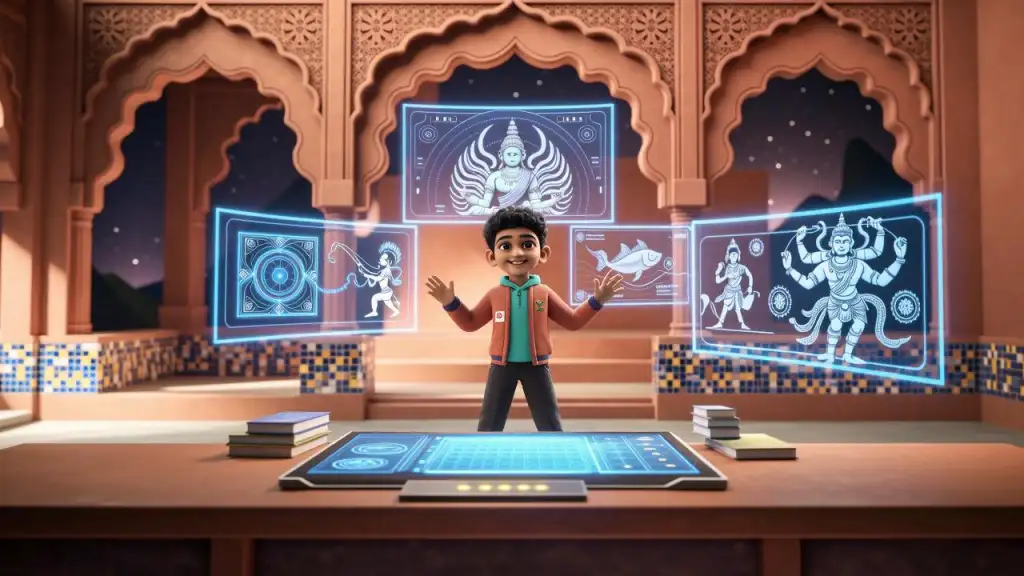
For decades, traditional schooling treated all learners the same. But now, with rapid advancements in artificial intelligence, shifting workforce demands, and a generation raised on global connectivity, one truth has become undeniable: education must adapt to the learner, not the other way around. And few archetypes benefit more from this shift than the Sagittarian—a natural explorer, truth-seeker, and lifelong learner.
Sagittarians don't just want to learn facts—they want context, meaning, and freedom. Born between November 22 and December 21, they are ruled by Jupiter, the planet of expansion, philosophy, and adventure. In educational terms, this translates into a hunger for exploration, a resistance to rigid structures, and an innate skepticism toward rote memorization.
In 2025, these once-frustrating traits are no longer liabilities. They're superpowers.
Imagine a high school history project where students from Hyderabad, Chittagong, Nairobi, and São Paulo co-create a documentary on colonial trade routes using blockchain-verified primary sources. Or a language course where a Sagittarian teen in Guwahati practices conversational Bengali with peers in Dhaka through real-time AI translation.
These aren't hypotheticals. By 2025, global classrooms have become mainstream, thanks to low-latency satellite internet and multilingual AI facilitators. Platforms like EduSphere Nexus connect over 3 million students across South Asia alone, enabling collaborative projects that transcend geography and time zones.
According to a 2024 joint study by ASER India and BRAC Bangladesh, only 37% of secondary students felt their current curriculum prepared them for real-world problem-solving. Among self-identified Sagittarians, that number dropped to 22% (Source: ASER-BRAC Education Report 2024).
Enter the era of new learning paths. No longer confined to single tracks, students in 2025 can design hybrid pathways combining AI ethics, Southeast Asian history, and creative coding into self-directed majors.
If Sagittarians are explorers, then AI tools are their compasses, maps, and fellow adventurers rolled into one. In 2025, AI has evolved into proactive cognitive partners—adaptive engines that learn alongside students.
Consider "Nova," the AI tutor mentioned earlier. Nova doesn't just deliver content; she analyzes engagement patterns and connects students to live expeditions tracking migratory birds via satellite tags—then links it to lessons on celestial navigation in Indian Ocean trade.
With AI tools like ThoughtWeaver, learners build dynamic knowledge webs in real time. As a student reads about climate change in Bangladesh, the AI automatically overlays related concepts: monsoon patterns, migration trends, policy debates, even poetry from flood-affected regions.
Developed jointly by IIT Delhi and BUET Dhaka, the Curiosity Algorithm identifies patterns in how different personality types engage with information. For Sagittarians, it prioritizes:
By 2025, the very definition of "graduation" is changing. Achievement is increasingly measured by demonstrated competence and project impact rather than standardized exams.
Meet Ananya, a 19-year-old from Siliguri. She built a portfolio of micro-credentials in conflict resolution and sustainable agriculture—earned through online courses and a six-month exchange program in Bhutan. Her mobile app translating indigenous farming wisdom earned recognition from the South Asia Youth Innovation Fund.
Universities like Ashoka and Independent University Bangladesh now allow undergraduates to propose custom programs. One student combined astrophysics, Sanskrit cosmology, and climate modeling into a major titled "Cosmic Ethics and Planetary Stewardship."
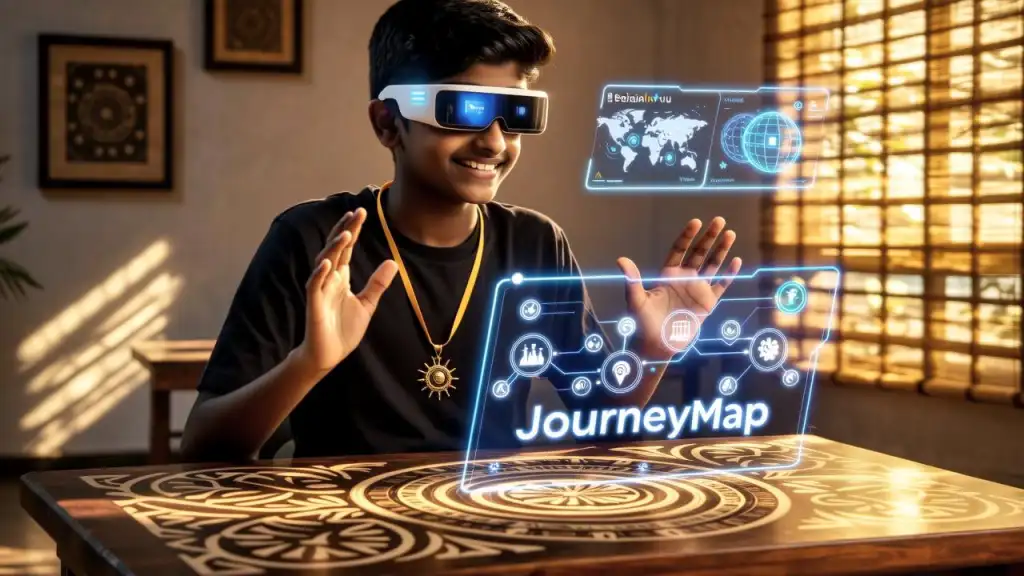
Will AI replace teachers?
Not at all. AI handles routine tasks, but human teachers remain essential for emotional support and ethical guidance.
Can I design my own university major?
Yes—if your institution supports self-directed learning. More universities in India and Bangladesh are opening this option.
【Disclaimer】This content about Education Transformation for Sagittarius in 2025 is for informational purposes only. Always consult qualified professionals for educational decisions. The author and publisher disclaim any liability for actions taken based on this content.
Arjun Dasgupta
|
2025.11.11
